


iTunes
Apple
When I think of iTunes, I do not see it as just another player for opening a song or video. I see it as a classic media hub built around one useful idea: keeping personal music and video purchases together so I can buy them, organize them, and play them from one place. That focus still gives the app a clear purpose, especially when my collection is spread across albums, individual tracks, and saved videos.
My review centers on that organizing capability because it changes the experience more than the playback controls do. A basic player can start a file, but iTunes is more helpful when I want to decide what belongs in my library, find it again later, and move between listening and watching without treating every item as a separate download. The result is familiar rather than flashy, and that is both its strength and its main limitation.
Why the media library is the real feature
The app comes from Apple and sits in the video-player and editing category, although its practical role is broader than editing. I use it as a personal catalog: music and videos are not merely files waiting in a folder, but items I can arrange into a collection with a more deliberate structure. That matters when I return to older purchases or want a particular album instead of relying on whatever happens to be easiest to locate.
Related News

The store summary describes iTunes as a place to buy, organize, and play music and videos. In everyday use, the three actions support one another. Buying adds something to the collection, organizing makes it findable, and playback gives the library a reason to exist. If I only need to press play on a single local clip, this approach can feel heavier than necessary. If I want a dependable home for a growing media collection, the structure makes more sense.
One subtle benefit is that organization changes how I choose what to watch or hear. A loose folder encourages me to remember filenames. A library encourages me to think in terms of albums, artists, and a personal selection of videos. That reduces the small but repeated friction of searching through unrelated downloads, particularly when I have not opened an item for a long time.
Related News

Why WhatsApp Messenger Still Makes Everyday Communication Feel Easy

Jurassic World: The Game Is the Better Dino Tycoon for Strategic Players

Threads in Real Life: Who Should Join, Lurk, or Leave

How SHEIN Turned Shopping Into an Endless Content Feed

How to Make Fortnite Feel Smarter on Mobile

Should You Switch to Microsoft Outlook on Mobile?
The important distinction is that iTunes is most valuable as a collection manager with playback attached. I would not recommend it solely because it can play media; many simpler tools can do that. I recommend it when the act of keeping a purchase or recording available matters as much as starting it.
Buying and organizing without losing the thread
The buying side is useful because it connects discovery with ownership inside the same media environment. Instead of finding a track in one place and later trying to remember where it went, I can make the purchase part of the library workflow. That makes the app feel more coherent than a collection assembled from unrelated folders and player apps.
Organization is where I notice the biggest practical difference. I can treat an album as an album rather than a pile of separate songs, and I can keep videos alongside the rest of the collection instead of switching to a completely different tool. This is particularly convenient for someone who alternates between listening to music and watching stored video during the same routine.
Gallery
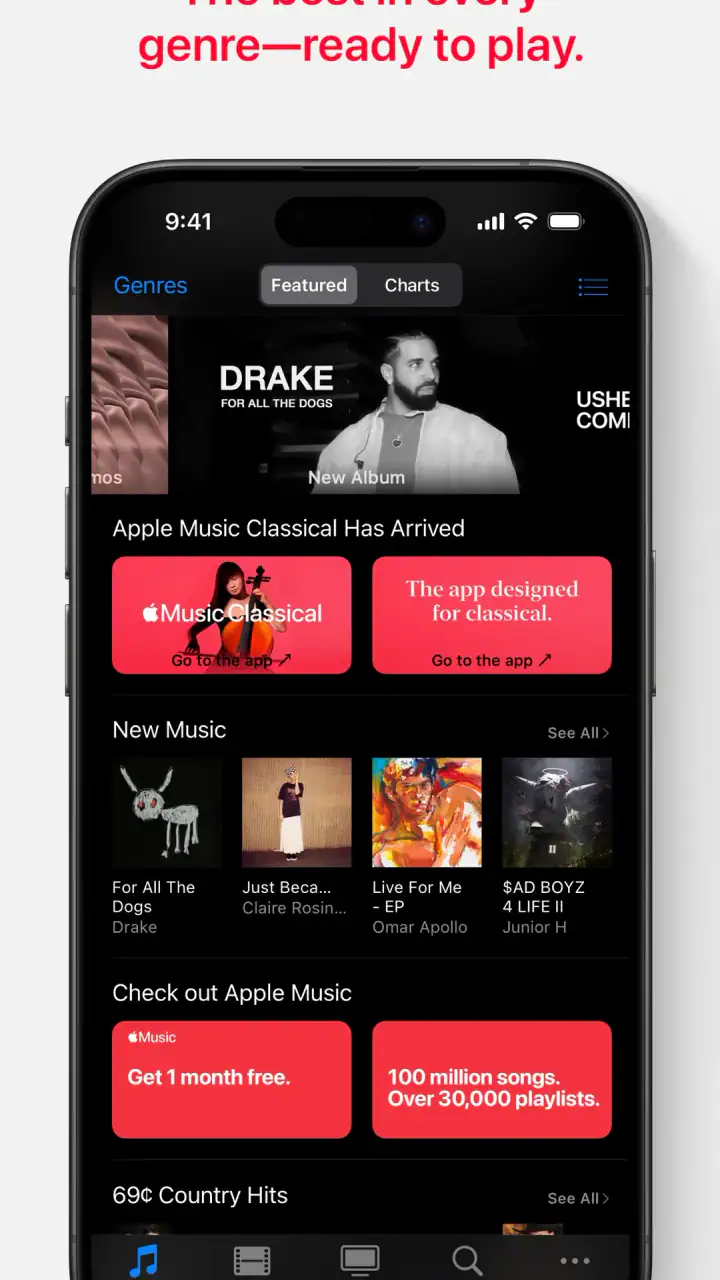
There is also a useful psychological effect: a well-arranged library makes older media easier to revisit. I am less likely to forget something simply because it is buried in a download directory. That does not make the app a sophisticated media server, but it does make it a better personal shelf than a generic file browser.
What playback feels like in a normal routine
For ordinary listening, I value the short path from opening the library to starting something familiar. I might choose an album while getting ready, switch to a video during a break, and return to music later without rebuilding my collection each time. The app’s appeal is not that every session feels new; it is that repeated sessions feel predictable.
That predictability is especially helpful for people who have already paid for music or videos and want a central place to access them. The interface and workflow are oriented toward a catalog, so the experience feels more intentional than opening media from a general-purpose file manager. I also find that browsing a collection can be more satisfying than searching for one isolated item every time.
At the same time, the classic design can feel less immediate than modern streaming services. Streaming apps are built around recommendations, instant discovery, and constantly changing catalogs. iTunes makes me work with what I have chosen to keep. That is a trade-off, not a defect: it favors control and familiarity over an endless supply of suggestions.
How I would use it in practice
A realistic everyday example
Imagine I am preparing for a trip and want a small, reliable entertainment collection rather than a long list of temporary recommendations. I can use iTunes to gather the albums I already want to hear and the videos I intend to watch, then organize them before leaving. The useful part is not simply having files available; it is knowing where each item sits when I have limited time and do not want to browse through unrelated content.
On a quiet evening, I might start with a complete album instead of selecting individual tracks. Later, I can move to a video without abandoning the same media hub. If I return to the trip collection weeks afterward, the organization still has value because it reflects my choices rather than a service’s current suggestions.
This workflow is also practical for a family member who is not comfortable managing folders. A clear library can be easier to understand than a storage location filled with files whose names are inconsistent. I would still spend time arranging the collection carefully at the beginning, but that effort pays off through easier retrieval later.
Three habits that make the library more useful
First, I would organize newly acquired media immediately instead of postponing the task. The longer I leave items unreviewed, the more likely the collection becomes difficult to browse. A few minutes spent deciding where a purchase belongs is more valuable than repeatedly searching for it later.
Second, I would use complete albums when I want a dependable listening session. Selecting tracks one by one is fine for a quick choice, but the album structure is one of the reasons to use a library-centered app in the first place. It preserves the context that a plain file list tends to lose.
Third, I would separate “media I want nearby” from “media I merely own” in my personal organization habits. That distinction prevents the library from becoming a dumping ground. iTunes can hold a broad collection, but it becomes easier to use when the items I return to most often are easy to recognize.
These are not dramatic hidden controls. They are workflow decisions, and they reveal an important truth about the app: its usefulness grows with the care I put into the library. Someone who refuses to organize anything may find little advantage over a basic player.
Where it fits beside other choices
Compared with a streaming service, iTunes gives me a stronger sense of a personal collection and less dependence on discovery features. Streaming is usually better when I want to explore unfamiliar artists, follow changing recommendations, or avoid managing purchases. iTunes is better when I already know what I want and want that material arranged around my own preferences.
Compared with a simple local media player, iTunes offers a more connected route between buying, cataloging, and playback. A lightweight player may open files faster and support a wider variety of casual formats, depending on the device and the individual app, but it usually does not provide the same library-centered feeling. I would choose the simpler tool for occasional playback and iTunes for a collection I expect to revisit.
Compared with a general file manager, iTunes is less about storage locations and more about media identity. I do not want to think about which folder contains a particular album when I am ready to listen. The catalog approach reduces that mental overhead, although it also asks me to accept the app’s way of organizing content.
Trade-offs I noticed before recommending it
The classic approach can feel restrictive
The same structure that makes a personal library comfortable can make the app feel rigid. I am working within a media environment rather than a blank canvas. If my collection is built from many unrelated sources, or if I want to handle unusual files with highly specialized playback options, I would look at a dedicated player instead.
There is also a difference between owning a catalog and discovering media. iTunes suits deliberate selection, but it is not the first tool I would reach for when I want an algorithm to surprise me with something new. People who measure value by the size of a constantly changing catalog may find the experience less exciting than a modern subscription service.
The app’s age is part of its character. It has been available since October 18, 2010, and that long history helps explain why many people recognize its role immediately. It also means the experience feels rooted in the classic media-library model rather than designed around newer habits such as short-form discovery and automatic recommendations.
Who should skip it
I would skip iTunes if my only requirement is opening occasional video files with minimal setup. A focused player may be quicker and less distracting. I would also skip it if I want one subscription-based service to provide a constantly refreshed universe of music and video rather than a library shaped by my own purchases.
It may not suit someone who dislikes categorizing media or who expects every app to behave like a flexible file browser. The organization is the point, so the app is a poor match if that organization feels like unnecessary work. Likewise, users who need advanced editing tools should not choose it merely because it appears in a category associated with video players and editors; its central identity is media buying, cataloging, and playback.
Questions I would ask before installing
Is it free? Yes, iTunes is available at no cost. That makes it easy to try the library workflow without making the decision depend on an upfront purchase. The more important question is whether I want a personal media hub, because free access alone does not make a catalog useful.
Is it suitable for children? Its content rating is Everyone, so the app is presented for a general audience. I would still pay attention to what is purchased or made available through the library, since an age label for the app does not turn every piece of media into child-focused content.
Does its popularity indicate that it is still relevant? The app has a 4.7 average from around 130 million ratings, with roughly 28 million written reviews and over 10 billion installs. Those figures show enormous reach and sustained familiarity, but they do not remove the need to match the workflow to personal habits. A widely used classic can still be the wrong choice for someone who wants specialized playback or discovery-first features.
Who benefits most? In my view, it is the person who has a meaningful collection of music and videos, prefers to keep that collection organized, and wants buying and playback to feel like parts of one process. It is also a reasonable choice for someone who values a recognizable, established media environment over constant interface novelty.
My recommendation after using the library approach
I recommend iTunes to readers who want their media to feel collected rather than scattered. Its strongest capability is not a flashy playback trick; it is the connection between acquiring content, arranging it, and returning to it later. When I use that workflow intentionally, the app becomes a dependable shelf for music and video instead of just another place to press play.
I would not recommend it as a universal replacement for streaming services, lightweight players, or editing software. Its trade-offs are clear: it asks for a more structured way of handling media, and it is less compelling when discovery or specialist controls matter more than ownership and organization. Those limits are easy to accept when the library model matches the way I already use media.
For me, the deciding test is simple. If I often ask, “Where did I put that album or video, and how can I keep it easy to find next time?”, iTunes addresses a real everyday problem. If I only ask, “Can this app play this file right now?”, I would choose something simpler. As a free app from Apple with an Everyone rating and a long-established place in digital media, iTunes is most convincing when treated as a personal catalog first and a player second.
FAQs for iTunes
What is iTunes and what can I use it for?
iTunes is a media player and library application developed by Apple. It allows users to organize and play music and videos on their devices. Additionally, iTunes serves as a platform for purchasing and downloading music, videos, and podcasts, as well as syncing content across Apple devices.
Is iTunes available on both Windows and Mac?
Yes, iTunes is available for both Windows and Mac operating systems. While macOS Catalina and later versions have replaced iTunes with separate apps for Music, Podcasts, and TV, Windows users can still download and use iTunes to manage their media libraries.
How can I transfer music from iTunes to my iPhone?
To transfer music from iTunes to your iPhone, connect your device to your computer using a USB cable. Open iTunes, select your device, and navigate to the "Music" tab. From there, you can choose to sync your entire library or select specific playlists, albums, or songs to transfer.
Can I use iTunes without an Apple ID?
While you can use iTunes to play media files stored on your computer without an Apple ID, purchasing or downloading new content requires an Apple ID. An Apple ID allows you to access the iTunes Store, purchase music, and sync content across your devices.
Are there any costs associated with using iTunes?
Downloading and using iTunes is free, but purchasing content such as music, movies, and TV shows from the iTunes Store involves costs. Prices vary depending on the content. Additionally, iCloud storage or Apple Music subscriptions have separate fees that enhance the iTunes experience.
Pros
- Extensive music library available.
- High-quality audio streaming.
- User-friendly interface design.
- Seamless integration with Apple devices.
- Offers personalized playlists.
Cons
- Limited compatibility with non-Apple devices.
- Subscription required for premium features.
- Can be resource-intensive on older devices.
- Occasional syncing issues with iCloud.
- Some users report bugs in the latest updates.


